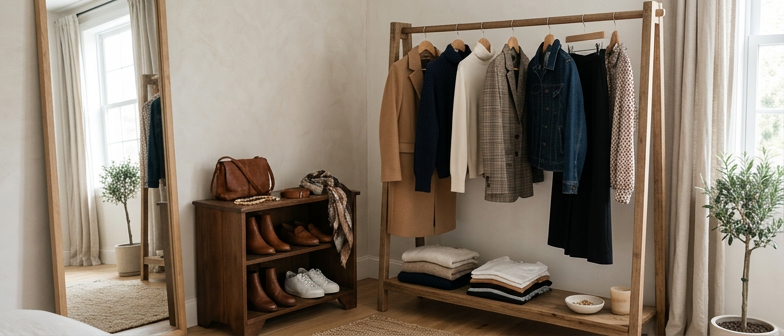
What Seasonal Capsule Wardrobe Planning Involves
Seasonal capsule wardrobe planning means curating a small, intentional selection of clothes and accessories for a specific time of year instead of keeping everything in constant use. Rather than a crowded closet, you create a focused set of pieces that suit the weather, your lifestyle, and current preferences. It centers on versatile capsule wardrobe essentials such as well‑fitting trousers, adaptable tops, and reliable layers. The goal is to simplify daily outfit choices, reduce visual clutter, and help you clearly see what you own and how each item can be worn.
A seasonal capsule differs from a regular wardrobe because it is built around purpose and planned rotation. Using a closet versatility mindset, each piece should combine with several others and work for recurring situations like work, errands, and social events. Off‑season or rarely worn items are stored, donated, repaired, or recycled as part of sustainable clothing rotation, extending garment life and discouraging constant new purchases. Over time, this habit encourages buying fewer, more adaptable pieces and adjusting your capsule as the weather and your needs change.
Identifying Capsule Wardrobe Essentials
Seasonal capsule wardrobe planning starts with a clear view of your lifestyle, climate, and weekly activities. Instead of copying trend-based lists, look at what you actually wear for work, home, and social occasions. A practical closet versatility guide focuses on a small set of reliable pieces for each season that you can repeat often. These capsule wardrobe essentials should fit well, match your comfort preferences, and layer or pair easily with other items, so every piece earns its place through function rather than novelty.
For spring and summer, rely on lightweight essentials that handle shifting temperatures, such as breathable tops, a couple of smart-casual bottoms, one or two easy dresses or jumpsuits, and a light jacket for cool mornings and warm afternoons. In autumn and winter, your core items usually include long-sleeve tops, warmer trousers, a versatile sweater, and an outer layer suited to your typical weather, whether that means a structured coat or an insulated jacket. Choose footwear and everyday accessories that move between settings so your capsule stays compact but still feels adaptable.
To keep your seasonal capsule consistent, build mainly on a neutral color wardrobe and add a few accent shades that work year-round. Neutrals like black, navy, grey, beige, or off-white mix and match easily and help each garment support more outfits. As you confirm your essentials, ask whether each item can be styled in at least three ways and worn in different contexts. This approach turns core pieces into dependable building blocks and supports sustainable clothing rotation, prioritizing durable, versatile garments over single-use items.
| Season | Core Clothing Essentials | Layering & Outerwear | Footwear & Accessories | Versatility Check |
|---|---|---|---|---|
| Spring | Breathable tops, smart-casual bottoms | Light jacket, thin cardigan | Comfortable closed shoes, light scarf | Works for home, office, casual social plans |
| Summer | Lightweight tops, shorts or skirts, easy dress | Unlined shirt layer, airy cover-up | Sandals or breathable trainers, sun hat | Moves between relaxed days and smart-casual outings |
| Autumn | Long-sleeve tops, mid-weight trousers | Versatile sweater, light coat | Weather-aware boots, structured bag | Suitable for changing temperatures and mixed settings |
| Winter | Warm knit tops, insulated bottoms | Thicker sweater, insulated jacket or coat | Sturdy boots, gloves, warm scarf | Adapts to colder commutes and indoor wear |
| Year-round neutrals | Black, navy, grey, beige basics | Neutral outer layers, classic blazer | Simple belt, everyday bag, subtle jewelry | Pairs into at least three outfits per item |
Balancing Core Pieces
A seasonal capsule wardrobe starts with core pieces you wear often, such as trousers, simple shirts, and versatile dresses in neutral colours. These capsule wardrobe essentials are chosen for comfort, good fit, and the ability to work in both casual and polished settings, keeping the closet focused instead of crowded.
Using Layers Effectively
Layering basics then extend those same items across changing weather. Light knits, breathable long sleeves, and a couple of jackets or blazers make it easy to add or remove warmth, turning a small set of clothes into a more versatile closet that still feels streamlined.
Adding Seasonal Extras
Seasonal extras and a few statement pieces sit on top of this structure. Selecting limited bolder colours or textures that still coordinate with your core wardrobe becomes a practical versatility guide and supports sustainable clothing rotation, refreshing your style without constant new purchases.
Using Color And Layers
A mainly neutral color wardrobe is a practical base for a capsule that has to handle shifting temperatures. Shades like black, navy, grey, beige, and white pair easily, so trousers, skirts, knitwear, and outer layers can be combined without clashing when the weather is unpredictable. This closet versatility means a small set of seasonal wardrobe essentials can work across different conditions, instead of needing separate outfits for every forecast.
Layering basics for changing weather start with light, breathable pieces such as cotton shirts or thin tops worn close to the body. Over these, add mid‑layers like cardigans, lightweight sweaters, or unlined blazers that you can remove as the day warms up. Finish with outer layers such as trench coats, insulated jackets, or raincoats to handle wind and rain. Choosing most of these layers in neutral tones keeps mix-and-match outfit planning simple as temperatures move from cool mornings to warmer afternoons.
A straightforward closet versatility guide is to judge each item by how many temperature ranges and situations it covers. Neutral layers that work both indoors and outside support a sustainable clothing rotation, because they can be worn often without feeling repetitive. A beige cardigan, for instance, can anchor cooler‑weather outfits with dark trousers and also be thrown over a light dress on milder days. By relying on adaptable neutral pieces, your capsule wardrobe stays useful across months while limiting the need for constant new purchases.
Layering Basics
In a seasonal capsule wardrobe, think of layering as base, mid, and outer pieces that adapt to changing weather. A base layer should be light, breathable, and close to the skin so it works alone on mild days or under warmer items. Mid layers add warmth without bulk, such as fine-knit sweaters or lightweight shirts that sit smoothly over the base and under a jacket. Outer layers like an unlined trench or a compact insulated jacket block wind or light rain and are easy to remove, keeping your closet versatile without needing many garments.
Fabrics And Fit
Good layering relies on fabric and fit so outfits stay comfortable and streamlined. Choose natural or blended fibers that allow airflow and dry quickly, helping pieces glide over one another. Keep base and mid layers slightly slimmer, with more relaxed outerwear so combinations feel neat rather than bulky. A mostly neutral colour palette mixes easily across outfits, turning this layering approach into a practical closet versatility guide that supports sustainable clothing rotation.
Planning Mix And Match Outfits
When you plan mix and match outfits for a seasonal capsule wardrobe, start with the activities that shape your week, such as office days, working from home, social plans, and occasional events. This shows how many smart, casual, and relaxed looks you really need. A neutral color wardrobe in shades like black, navy, grey, beige, and white makes planning easier because most pieces coordinate, so tops, bottoms, and layers move smoothly between work and leisure. Think of the closet as a system rather than separate items: each garment should work in several outfit combinations, turning your clothing into a practical versatility guide instead of a row of single-purpose looks.
To keep that flexibility, rely on a few simple outfit formulas, such as blazer with top and trousers for work, knit with jeans for downtime, or dress with a light layer for evenings out. Check that every capsule wardrobe essential fits at least three of these combinations and that colors, proportions, and formality stay consistent. Changing shoes and accessories like belts, bags, or jewellery helps one base outfit look professional, relaxed, or slightly dressy without adding more clothing. This style of mix and match planning supports sustainable clothing rotation because you wear what you own more often, notice real gaps before shopping, and keep your wardrobe aligned with changing weather and routine instead of fast trends.
Q&A
-
What does seasonal capsule wardrobe planning actually involve?
It means selecting a small, intentional set of clothes and accessories for one season, based on your climate, lifestyle, and comfort needs, so getting dressed is simpler and your closet is less cluttered. -
How can I identify capsule wardrobe essentials for my typical week?
Track what you wear for work, home, and social plans, then choose a limited number of well‑fitting trousers, tops, and layers you reach for repeatedly, prioritising comfort and versatility over trends. -
What is a practical way to balance core pieces, layers, and seasonal extras?
Start with everyday items like neutral trousers, shirts, and dresses, add a few layering pieces for warmth, then include a small number of seasonal extras such as a raincoat or sandals that suit current weather. -
Why do many capsules rely on a neutral colour wardrobe?
Neutral shades like black, navy, grey, beige, and white mix easily, so you can create multiple outfits from fewer garments and adjust layers for changing temperatures without worrying about clashes. -
How does a sustainable clothing rotation fit into mix and match outfit planning?
You rotate a limited number of pieces through different outfits, repair and care for them well, and add new items slowly, encouraging long‑term use instead of frequent replacement.