Why A Packed Rail Still Feels Limiting
It’s not about quantity
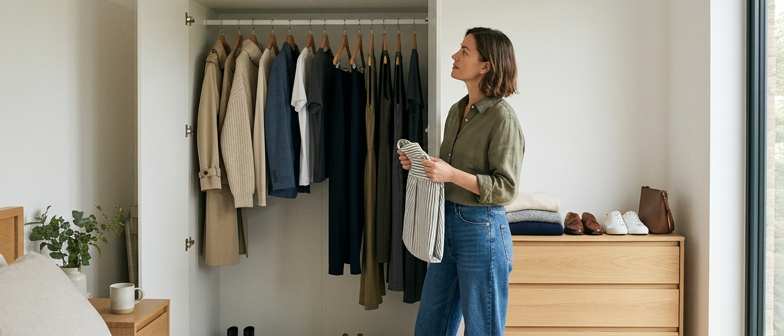
Feeling stuck in front of a full rail usually comes down to mismatch rather than lack. Many items no longer suit your lifestyle, body, or taste. They are physically present, but not true options. The clothes you actually wear in a normal week are often only a fraction of what you own.
If your days involve commuting, working at a desk, errands, and relaxed evenings, then delicate party pieces or uncomfortable shoes may never leave the hanger. When most of the rail is made up of those “almost, but not quite” items, your useful choices feel very narrow.
Instead of asking what you might wear “if”, ask what you genuinely reach for “when”. Clothes that fit, feel good, and suit your daily activities deserve to stay in the main rotation. Others can be stored, altered, or released so they stop adding to decision fatigue.
When outfits lack a plan
A full closet feels unhelpful when single pieces do not connect into outfits. You might own plenty of good‑looking items that refuse to work together: trousers that clash with most tops, shoes that only suit one dress, or jackets that feel too formal for your usual week.
Without easy combinations, every morning starts from scratch and the rail begins to feel like clutter rather than support. A more structured mindset reverses this: instead of collecting stand‑alone items, you gather a small group that can be worn in many different ways.
Repeating simple silhouettes, leaning on neutrals, and defining a few accent shades can turn a modest number of garments into a range of looks. Familiar pieces begin to feel more flexible and the same closet starts to feel more coherent and calm.
Finding Neutral Shades That Suit You
Start with what you already rely on
Before choosing any “ideal” neutral palette, look at the clothes you actually wear on repeat. Pull out the items that work hard for you: perhaps dark trousers, soft grey knits, or light denim. These favourites show which tones already support your lifestyle and appearance.
From there, pick two or three base neutrals that could realistically make up most of your wardrobe. These might include deep or mid‑tone shades, lighter options, and classic denim. The aim is not to follow strict rules, but to choose colours you can imagine wearing many times a week.
If a stark shade feels too harsh, try a softer version in the same family. If you dislike maintaining bright white, consider off‑white or light beige instead.
Match underttones and lifestyle
Neutrals are not automatically universal. Some look fresher on cool undertones; others flatter warmer features. Holding different shades near your face in natural daylight can reveal which ones brighten your overall look and which seem to drain it.
Once you notice a pattern, keeping most of your main colours either mostly cool or mostly warm helps everything blend easily. When jackets, trousers, shoes, and bags share a similar undertone, they tend to combine without much thought.
Lifestyle also plays a part. Softer light shades in breathable fabrics often feel more comfortable in warm, sunny weather or relaxed environments, while deeper tones and heavier textures can feel more at home in cooler conditions or more formal spaces. If your week moves between casual and polished, choosing adaptable pieces lets the same base work in several contexts.
| Neutral focus | When it often helps | Trade‑offs to consider |
|---|---|---|
| Mostly light tones | Bright homes, relaxed workplaces, warmer climates | May show marks more easily, can feel less formal |
| Mostly dark tones | Office settings, cooler weather, structured looks | Can appear heavy if overused, needs lighter accents |
| Mixed light and dark | Varied routines, travel, flexible dress codes | Requires more thought to keep combinations balanced |
Creating Outfits Around Your Actual Routine
Building a useful selection of outfits starts with your real life. Map out what you actually do during the week and what you like to wear for each activity.
List your regular situations: commuting, office work or study, remote days, caring responsibilities, casual weekends, social evenings, light movement, and occasional events. Each becomes a small “slot” that needs at least one reliable look. This prevents the collection from tilting towards outfits you rarely need.
From there, decide roughly how many options you want for each slot. You might prefer several easy work looks, a couple of errand outfits, and one or two dressier combinations. When a piece only fits one narrow scenario, it can still earn its place if it is a genuine favourite, but it makes sense to be selective.
Start with simple outfit formulas
Using basic outfit “formulas” keeps mixing and matching straightforward, for example:
- Structured top + relaxed bottom + clean trainers or flats
- Soft knit + tailored trousers + simple loafers or boots
- Statement blouse + plain jeans + neat ankle boots
- Basic tee + easy skirt + low‑key sandals
Choose one or two formulas for each part of your week. Check whether every bottom works with most of your tops and at least two types of shoes. Repeated accent colours, similar fabric weights, and a consistent neutral base help everything connect.
When you consider adding something new, see how many formulas it supports. If it only works with one other item or needs extra purchases to make sense, it may not earn a spot.
| Piece type | How to stress‑test before buying | When it usually works best |
|---|---|---|
| Tops | Should pair with most bottoms and at least one layer | Solid colours or subtle patterns in your core palette |
| Bottoms | Should suit several tops and two shoe styles | Simple cuts that match your weekly activities |
| Layers | Should work over multiple outfits, not just one dress | Neutral tones that echo your main colours |
| Shoes | Should fit at least two outfit formulas | Comfortable styles suited to your daily movement |
Try your combinations in real life
Before committing to a new arrangement, build full outfits on a rail or bed, including shoes, layers, and bags. Seeing everything together often reveals gaps, such as missing warm layers or a need for more comfortable footwear.
If possible, wear‑test a small selection for several days. Notice what you reach for first and which situations feel uncovered. Adjust slowly, one piece at a time.
Editing, Organising, and Maintaining A Calm Space
A calmer, more usable closet usually starts with editing what you already own. Before thinking about new purchases, review existing items with three questions: does it fit comfortably, is it in good condition, and how do you feel when you wear it?
Pieces that pinch, sag, require constant adjusting, or are always skipped are unlikely to earn space in a focused wardrobe. Removing them from the main rail reduces visual noise and makes it easier to see the items that genuinely serve you.
Special or sentimental garments can be kept, but they do not need to live among everyday choices. Storing them in a separate box or less‑frequented area protects them while keeping daily decisions simpler.
Simple systems for storage
Once you have edited, grouping items by type and colour brings the benefits of your chosen palette into view. Hanging jackets, shirts, dresses, and trousers in sections, moving from light to dark, helps you spot natural outfit pairings and any unnecessary duplicates.
Heavier knitwear generally does better folded than hung. Stacking it at an accessible height keeps it in rotation instead of buried under out‑of‑season pieces. Accessories also play a quieter organising role: placing belts on hooks, bags on a visible shelf, and everyday jewellery in a small tray makes them easy to grab and put away.
Short, regular check‑ins help maintain this sense of order. A quick review every few weeks to return items to their place, remove anything that no longer works, and note genuine gaps can keep the space feeling light and intentional. Over time, this routine supports steadier shopping habits and a closet that works with you rather than against you.
Q&A
-
How do I begin practical Capsule Wardrobe Planning without throwing everything out at once?
Start by tracking what you actually wear for four weeks and isolating those pieces on one rail. From that mini‑selection, identify gaps and duplicates, then set a target number per category, like five tops and three bottoms. Gradually rotate in or out items based on comfort, versatility, and frequency of wear. -
What are some Everyday Outfit Coordination shortcuts for busy mornings?
Create three to five repeatable outfit formulas built around your lifestyle, then photograph your favourite combinations on your phone. Keep pieces that fit at least two formulas within easy reach on a single rail or shelf. Rotating accents like scarves or jewellery lets outfits feel fresh while the underlying structure stays simple. -
How should Seasonal Clothing Basics adapt between warm and cold months?
Choose a stable core of all‑season essentials, then layer seasonal pieces around them, such as breathable shirts for summer and heavier knits for winter. Store off‑season items in labelled boxes and review them briefly each change of season, editing out anything unworn so your current rail always reflects the weather and your routine. -
What Neutral Color Styling Tips help outfits look intentional, not boring?
Mix different textures within a neutral palette, like denim, cotton, and wool, to add depth without loud colour. Use one consistent undertone, warm or cool, then introduce a single accent shade through accessories or one garment. Playing with proportion, such as slim tops and wider trousers, also keeps minimal outfits visually interesting. -
How can a Closet Organization Routine support Smart Clothing Purchase Habits and Minimal Fashion Essentials?
Schedule a short monthly tidy where you rehang items by type and colour, pull anything unworn, and note genuine gaps. Keep a running wish list tied to outfit formulas, not trends, and wait a cooling‑off period before buying. This rhythm naturally limits duplicates and keeps your wardrobe focused on hard‑working, minimal essentials.